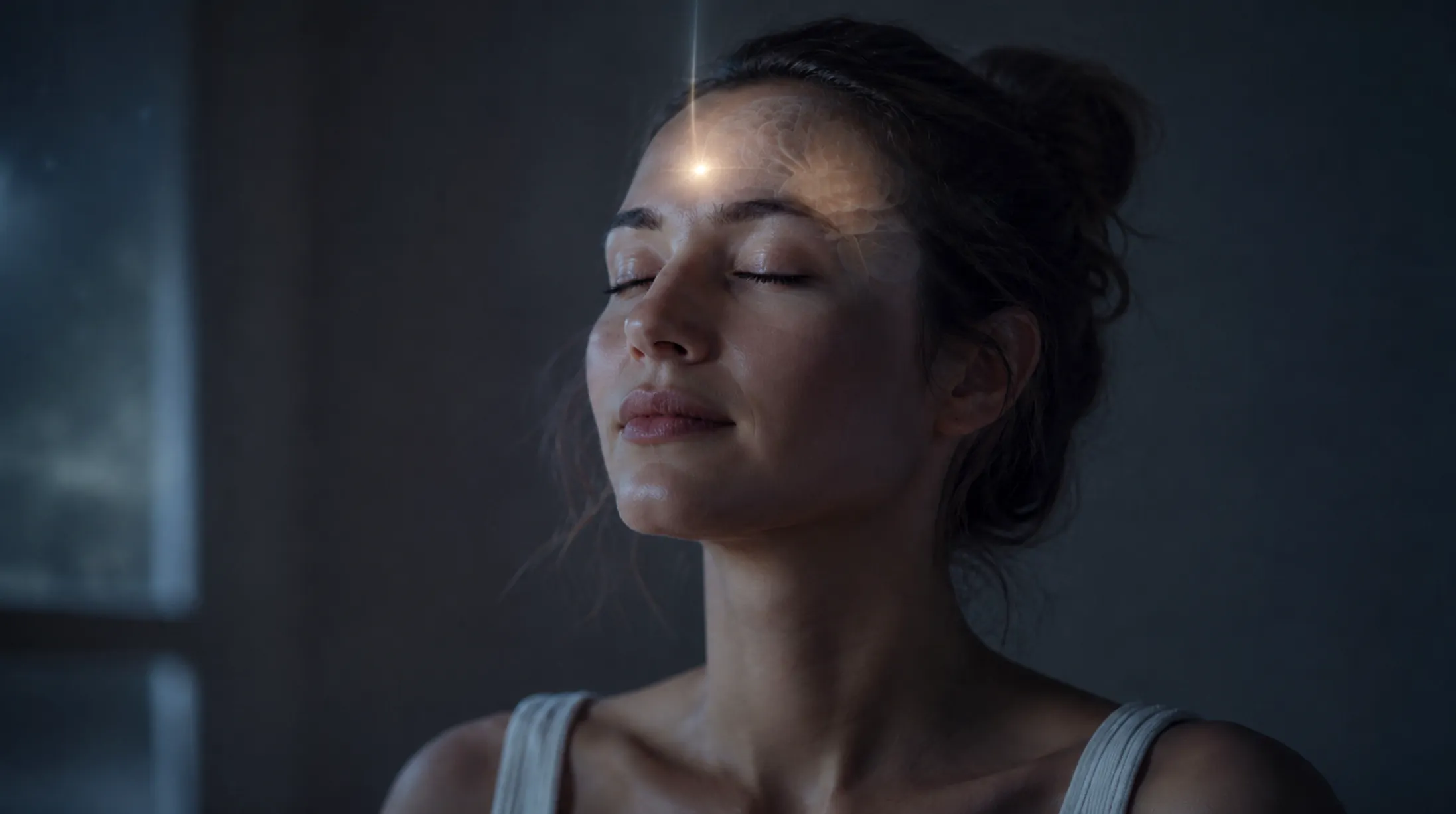
The term “third eye” has been used for so long in spiritual and esoteric traditions that many people either romanticize it or dismiss it completely. For some, it sounds mystical and profound. For others, it sounds vague, symbolic, or disconnected from real life. The more useful approach is probably somewhere in the middle. The third eye may be a spiritual metaphor, but it also points toward something real in the body: the pineal gland.
The pineal gland is a small structure near the center of the brain, and while it is often surrounded by mythology, its practical importance is not hard to understand. It helps regulate our relationship with light and darkness, which means it plays a role in sleep, energy, mood, and the rhythm of our daily lives. You do not need to believe anything unusual to appreciate that. Anyone who has spent a week sleeping poorly, staring at screens late into the night, and waking up feeling dull or disconnected already understands, on some level, how much light, rest, and rhythm affect the way we experience life.
That is the point worth returning to. When people talk about the third eye, they are often reaching for language to describe clarity, intuition, inner awareness, and the ability to see beyond the noise of the moment. Whether you approach that spiritually, biologically, or simply practically, the question is the same: are you living in a way that supports clear perception, or are you constantly disrupting the very system you expect to guide you?
"“Clarity is not mystical when you understand what supports it. Your body, your sleep, your environment, and your attention are all part of the same conversation.”"
— Matt Grybel, FounderThe Body’s Relationship With Light
The pineal gland has long been associated with light, and that association is part of what made it so symbolically powerful across cultures. In simple terms, this small gland is involved in helping the body respond to the cycle of day and night. When the day is bright and active, the body is receiving one kind of signal. When night arrives and the environment becomes dark, the body is supposed to receive another.
That may sound basic, but modern life has made it difficult. Most people no longer live according to natural light. They wake up indoors, work under artificial lighting, stare into screens throughout the day, and then continue exposing themselves to bright light late into the evening. The body may be tired, but the signals it receives are confused. It is being asked to prepare for deep rest while the environment keeps telling it to stay alert.
This matters because clarity is not only a mental issue. A person who is exhausted, overstimulated, and under-rested will usually have a harder time trusting themselves. They may overthink decisions, react more emotionally than usual, or mistake fatigue for lack of direction. What looks like a mindset problem may sometimes be a rhythm problem.
Think about the difference between making a decision after a full night of sleep and making the same decision after several nights of poor rest. The facts may be identical, but the person interpreting those facts is not. When your body is regulated, problems feel more workable. When your body is depleted, even small problems can feel personal, urgent, and overwhelming.
The pineal gland becomes important here not because it is mysterious, but because it reminds us that human beings are not machines, we are rhythmic. We respond to light, darkness, rest, stimulation, food, stress, and environment. If you want clearer thinking, steadier emotions, and deeper intuition, begin to pay attention to the conditions you are creating for your own system.
Sleep Is Not Empty Time
One of the most practical ways to think about the pineal gland is through sleep. The body does some of its most important repair work when we are not consciously managing anything. Sleep supports emotional regulation, immune function, memory, recovery, and the general sense that we are capable of meeting the next day. When sleep breaks down, almost everything else becomes harder.
This is where the conversation becomes very human. Most people do not need a lecture about the importance of sleep; they need to admit how casually they sacrifice it. They answer one more email, scroll on social media for another 20 minutes, watch one more episode of their show, or carry the stress of the day straight into bed. Then they wake up tired and wonder why they feel disconnected from themselves.
A better relationship with sleep does not require a dramatic lifestyle overhaul, but it does require discipline. Dim the lights earlier, put the phone away before bed, let the room get dark, and give your mind time to come down from the day. Stop treating rest like a reward you earn after exhaustion, and start treating it like a requirement for becoming the person you say you want to be.
There is something deeply revealing about the way a person approaches rest. If you believe everything depends on force, you will treat sleep as an inconvenience. If you understand that your body is part of your success, you will protect sleep as part of your discipline. That does not mean every night will be perfect, but it does mean you stop acting surprised when poor recovery produces poor clarity.
"“What happens when you sleep is not wasted time. It is where your body restores the capacity you keep demanding from it during the day.”"
— Matt Grybel, FounderIntuition Needs a Quieter Environment
The “third eye” is often associated with intuition, but intuition is frequently misunderstood. It is not guessing wildly, ignoring evidence, or believing every strong feeling that passes through the body. Real intuition is quieter than that. It tends to appear when the mind is settled enough to notice what it already knows.
Most people are not lacking intuition; they are drowning it out. They are consuming too much, reacting too quickly, checking too often, and living in a constant state of internal noise. The result is that every signal starts to feel the same. Anxiety, instinct, desire, fear, pressure, and genuine knowing all get mixed together, and then the person says, “I don’t know what I feel.”
Creating a quieter environment helps separate those signals. Silence, stillness, walking without headphones, journaling before making a major decision, or sitting for 5 minutes before responding to a triggering message can all create enough space for clarity to rise. None of this needs to be dramatic, and none of it needs to be performed for anyone. It is simply the practice of giving yourself enough room to hear yourself, God, intuition, and that quiet voice within.
This matters especially for people building something meaningful. Founders, creators, leaders, and high performers often live in environments that reward speed, reaction, and constant availability. But the best decisions are not always made by the person who responds fastest. They are often made by the person who can stay quiet long enough to distinguish urgency from importance.
The mind is excellent at analysis, but it can become a poor master when it is overstimulated. Intuition is not the opposite of intelligence; it is another form of intelligence that becomes more accessible when the system is not overloaded. If you want to trust yourself more, do not begin by demanding louder answers. Begin by reducing the noise.
Separating Mystery From Misinformation
Part of the challenge with the pineal gland is that it attracts both genuine curiosity and exaggerated claims. Some people speak about it as though it explains every spiritual experience, while others dismiss the entire subject because of the way it has been overused. Neither response is particularly helpful.
A more grounded view allows for mystery without abandoning discernment. The pineal gland is real, and its role in sleep and biological rhythm is meaningful. It has also been symbolically important in many traditions, and that symbolism can be valuable. But we do not need to overstate the science in order to respect the subject.
This is important because credibility matters. When we make claims too strongly, especially around consciousness, ancient symbolism, or hidden knowledge, we can weaken the very idea we are trying to communicate. The more powerful move is to say what we know, acknowledge what is still being explored, and then bring the conversation back to what a person can actually do in daily life.
You do not need to prove every ancient symbol was secretly pointing to one gland in the brain in order to learn something from the symbolism. You do not need to claim that modern life is deliberately designed to suppress your awareness in order to recognize that poor sleep, constant stimulation, and disconnection from nature are making people less clear. The practical truth is already strong enough.
The body is intelligent, the mind needs stillness, and the nervous system needs rhythm. The person who lives in constant artificial stimulation should not be surprised when inner clarity feels distant. These are not fringe ideas, they are observable in everyday life.
"“The truth does not need exaggeration. When an idea is strong, grounding it makes it more powerful, not less.”"
— Matt Grybel, FounderSupporting What Is Already There
The most useful question is not whether you can “activate” something mystical, but whether you are supporting the natural intelligence already built into you. Your body is constantly responding to the environment you place it in, and your inner state is shaped by the signals you repeat most often.
If you want to feel clearer, start with the obvious practices that most people overlook. Get morning light, reduce bright light and screens at night, sleep in a dark room, spend time in silence, pay attention to what constant stimulation is doing to your ability to focus, and create space before major decisions. Notice whether your fear gets louder when you are tired, and notice whether your intuition becomes clearer when your body is rested and your mind is quiet.
These practices are simple, but simple does not mean shallow. In many cases, the most important changes are not exotic, they are the basic disciplines we avoid because they require consistency. People often want a breakthrough, but they do not want a bedtime. They want intuition, but they do not want silence. They want clarity, but they keep filling every empty space with noise.
The idea of the third eye can still be useful, as long as we bring it back to lived experience. It can remind us that there is more to perception than information. It can remind us that clarity depends on condition, not just intelligence. It can remind us that the way we sleep, think, consume, and recover affects the way we see.
In that sense, the third eye is not something you need to chase, it is a symbol for a kind of awareness you cultivate through how you live. When the body is supported, the mind is quieter, and the heart is less defended, you begin to notice more. You see patterns sooner, trust yourself more easily, stop confusing stimulation with aliveness, and you start recognizing the deeper intelligence that was there all along.
The path is not strange, it is actually very practical. Respect your rhythm, protect your sleep, reduce the noise, and create darkness at night and space during the day. Then, pay attention to what becomes clearer when you stop living against your own design.
Go Deeper
The 7 Natural Laws are the foundation. The Élevée Mindset Programs are where they get installed — through structured practice, self-image work, and the discipline of applying these principles daily.
Explore the Mindset Programs →