Most of us spend a surprising amount of time living slightly removed from our own lives. We are physically present, but mentally we are somewhere else. We are replaying a conversation from yesterday, planning a version of next week that may never happen, anticipating a problem that has not arrived, or quietly arguing with someone who is not even in the room.
We call this thinking, (and sometimes it is), but often it is a habit of leaving the present moment. We drift into commentary, analysis, prediction, and self-protection, and without realizing it, we miss the only place where life is actually happening: here, in this moment, in this body, in this breath.
That is what I mean by returning to heart space. It is not a mystical idea, and it does not require you to become someone who meditates for an hour every morning or speaks in spiritual language. It simply means coming back into direct contact with your life as it is happening and returning to the power of now. You stop narrating everything for a moment, and you begin observing what is actually here.
For a founder, that might mean pausing before a difficult call instead of rushing into it from anxiety. For a parent, it might mean really seeing your child at the dinner table instead of mentally scrolling through tomorrow’s obligations. For anyone trying to build a better life, it might mean admitting that the mind is constantly trying to solve everything, while the body is quietly asking for a moment of peace.
The Rampage of Appreciation
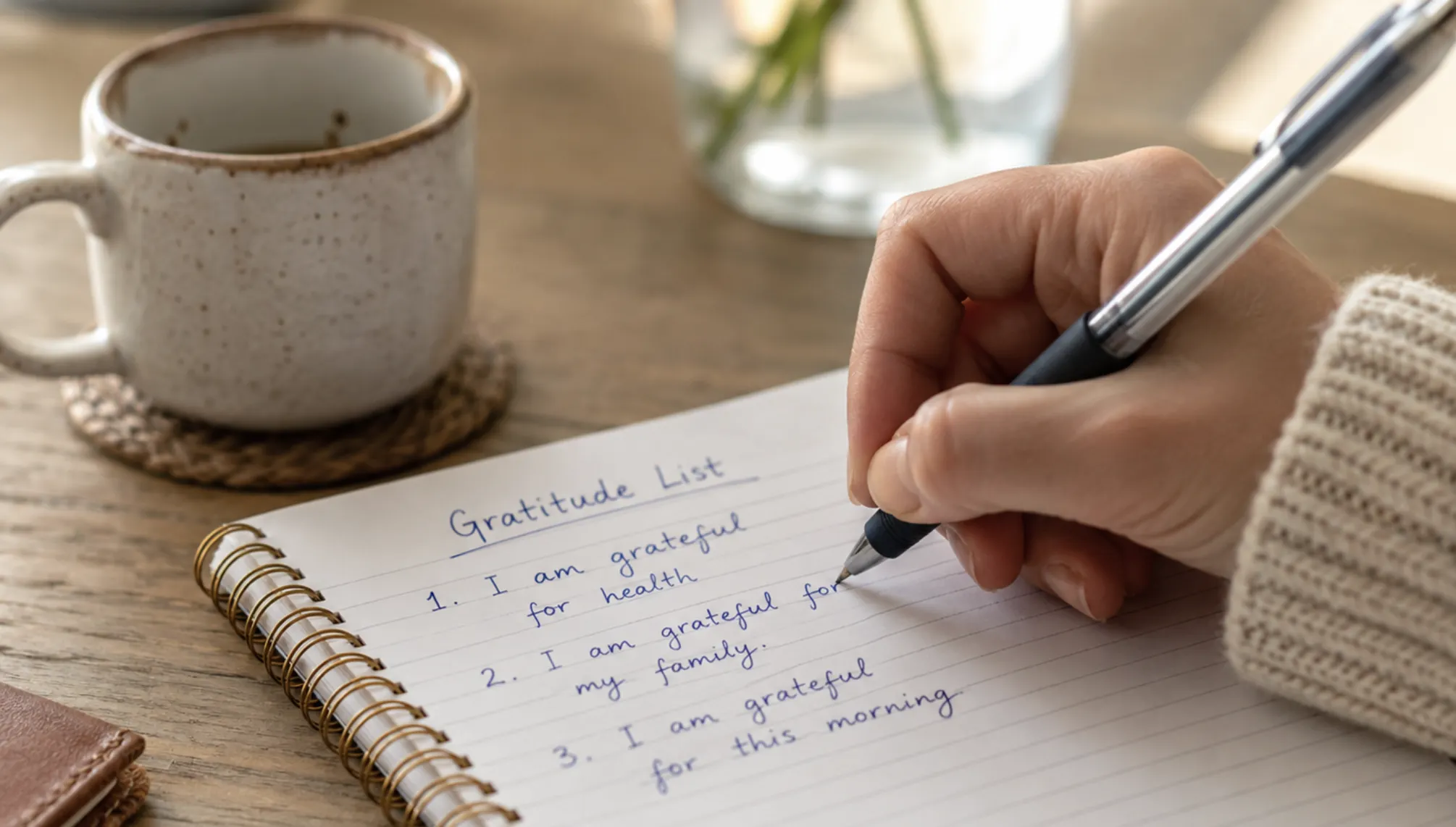
One of the simplest ways to return to the present moment is through appreciation. Not forced gratitude, and not the kind of gratitude that tells you to be thankful so you can avoid feeling what is real. I mean the honest practice of noticing what is already good, useful, supportive, or beautiful in the moment you are actually in.
You can do this anywhere. You can do it in the car before a meeting, at your desk before opening your inbox, on a walk, or in the middle of a difficult season when very little feels settled. Begin by naming what you genuinely appreciate: the warmth of your morning coffee, the fact that you woke up, the person who texted you to check in, the stillness of the room, the opportunity to try again today, the fact that your body is alive and well.
At first, the mind may resist this because it is trained to look for what is missing, broken, late, unpaid, unresolved, or uncertain. That does not make the mind bad; it just means the mind has been practicing problem detection for a long time. The rampage of appreciation interrupts that pattern, and it redirects attention toward what is present rather than what is absent.
The point is not to pretend problems do not exist. The bills may still be due, the business may still need work, the relationship may still require a hard conversation, and the uncertainty may still be real. But when you practice appreciation, you stop allowing the problem to occupy the whole room, and you give your nervous system somewhere else to stand, and from that place, you can usually respond with more clarity.
Gratitude is often talked about as a feeling, but it is more useful to understand it as a practice. Feelings come and go, while practices can be deliberate. Some days gratitude will feel natural, and other days it will feel like discipline. Either way, the act of noticing what is good brings you back into your own life.
"“Gratitude is not a way to deny reality; it is a way to remember that reality is larger than the problem in front of you.”"
— Matt Grybel, FounderComing Back to the Present Moment
People say “be present” so often that the phrase can start to lose meaning. But presence is not vague, it is extremely practical. It means bringing your attention back to what is actually happening instead of living inside a mental simulation of what might happen next or what should have happened before.
The past is experienced through memory, and the future is experienced through imagination. Both can be useful, but neither is the same as being here in the present moment. When you are anxious, you are often emotionally living inside a future that has not happened. When you are stuck in regret, you are often emotionally living inside a past that cannot be edited. In both cases, your body may be in the present, but your attention has left.
Returning to the present does not mean you stop planning, and it does not mean you ignore the lessons of the past. It means you stop letting memory and imagination run your entire internal state. You can learn from yesterday and prepare for tomorrow, but you can only act from the power of now.
This matters because most of the power we are looking for is only available in the present. You cannot make a call yesterday, you cannot have a hard conversation next month, you cannot breathe tomorrow, you cannot change your habits in theory. You can only do the next honest thing from where you are right now.
For most people, the practice is not dramatic. It is noticing that your mind has left the room, and then gently returning. You feel your feet on the floor, you unclench your jaw, you take a slower breath, you look at the person in front of you. You return to the sentence you are writing, the meal you are eating, the decision you are making, or the task that actually needs your attention.
That is not small, it is how you reclaim your life from the noise.
Understanding Fear Without Becoming It
Fear is one of the main reasons we leave the present moment. The mind senses uncertainty, and almost instantly, it starts building scenarios. What if this fails? What if they leave? What if I lose the money? What if I am not ready? What if people see me try and it does not work?
Fear can be useful because it is information. It can point to something that needs preparation, protection, a boundary, or a better plan. But fear becomes a problem when we stop reading it as information and start treating it as instruction. There is a difference between listening to fear and letting fear lead.
When fear shows up, the most practical move is to slow down enough to examine it. Ask what it is trying to protect, ask whether the threat is real, immediate, and actionable, or whether the mind is reacting to an imagined future. Sometimes fear is telling you to prepare more thoroughly, sometimes it is telling you to stop ignoring a red flag, and sometimes fear is simply the old self trying to keep you safe to what’s familiar.
A person building something meaningful will feel fear. That is not a sign they are on the wrong path, it may simply mean they are approaching the edge of an old identity. The goal is not to eliminate fear, because that is neither realistic nor wise. The goal is to become steady enough that fear can be present without becoming the one in charge.
This is where observation changes everything. When you can say, “Fear is here,” rather than “I am afraid and therefore I must stop,” you create space. In that space, you regain your ability to choose your response. And in your response, lies your growth and freedom. You may still decide to pause, prepare, ask for help, or change direction, but the decision will come from awareness rather than panic.
"“Fear is allowed to speak, but it does not get to run the meeting.”"
— Matt Grybel, FounderSurrender Without Giving Up
Surrender is another word that is easily misunderstood. To many people, surrender sounds like weakness, passivity, or defeat, but real surrender is not giving up. It is releasing the illusion that control and responsibility are the same thing.
You are responsible for your effort, your preparation, your integrity, your standards, and your willingness to act. You are not responsible for controlling every response, every timeline, every person, and every outcome. When you confuse those two, life becomes exhausting because you start trying to manage things that were never fully yours to manage.
Surrender is what allows a person to do the work without digging up the seed every hour to see if it is growing. You make the offer, but you do not obsess over the reply. You have the conversation, but you do not try to control how the other person processes it. You build the business, but you do not collapse every time the market gives you feedback. You take the next right action, and then you allow life to meet you in ways you may not have predicted.
This does not mean you become careless. In fact, surrender often makes you more effective because it removes the frantic energy that causes people to overcorrect, overexplain, overmanage, and overthink. When you stop worrying about the ‘how’, your actions become cleaner, your timing improves, and your judgment gets quieter and more accurate.
There is a kind of trust required here, but it does not have to be religious or abstract. It can simply be the trust that clear effort compounds, that aligned action matters, and that you do not need to see the entire path in order to take the next step. That kind of trust gives the mind permission to settle, and when the mind settles, intuition becomes easier to hear.
Letting the Body Finish What the Mind Keeps Replaying
One reason presence can feel difficult is that many people are carrying experiences they never fully processed. Some of these experiences are obvious, while others are subtle and accumulated over time. A disappointment that was brushed aside, a rejection that was minimized, a season of stress that had no room to complete, or a grief that was intellectualized instead of felt can all leave an imprint.
The mind often tries to solve these experiences by explaining them. It builds stories, searches for reasons, and replays the details in an attempt to find closure. Sometimes understanding is helpful, but understanding alone is not always the same as release. There are moments when the body needs to feel what the mind has been trying to manage.
This is why returning to heart space can sometimes feel uncomfortable at first. When the noise gets quieter, you may notice sadness, fear, anger, tenderness, or exhaustion that was always there beneath the surface. That does not mean you are doing it wrong, it may mean you are finally quiet enough to hear what has been asking for your attention.
The practice is not to dramatize every feeling or turn every emotion into an identity. The practice is to let the feeling move without immediately resisting, explaining, or escaping it. You breathe, you notice where it lives in the body, and you let it be there without making it the whole story. If the emotion is intense or connected to trauma, support from a qualified professional can be important, and there is strength in getting help rather than trying to force your way through it alone.
Heart space is not an escape from reality, it is a more honest contact with reality. It is where you stop performing strength and start building the real thing. You come back, you stay a little longer each time, and you learn that much of what you were running from was not there to destroy you. It was there to be felt, understood, and released.
Ultimately, the practice is simple: return to the life you are actually living. Return to the room, return to the breath, return to the people you love, return to the work in front of you, and return to the part of yourself that does not need to narrate every moment in order to be safe.
The mind is useful, but it was never meant to be your only home. The heart is where life becomes immediate again, and when you learn to return there, even briefly, you begin to meet your life with more honesty, more steadiness, and more grace.
Go Deeper
The 7 Natural Laws are the foundation. The Élevée Mindset Programs are where they get installed — through structured practice, self-image work, and the discipline of applying these principles daily.
Explore the Mindset Programs →